




M10 & G12
Wafer Technology
Built around advanced 182 mm and 210 mm wafer formats, our modules are designed to deliver higher power, better layout efficiency, and a stronger cost-per-watt advantage in real project environments.
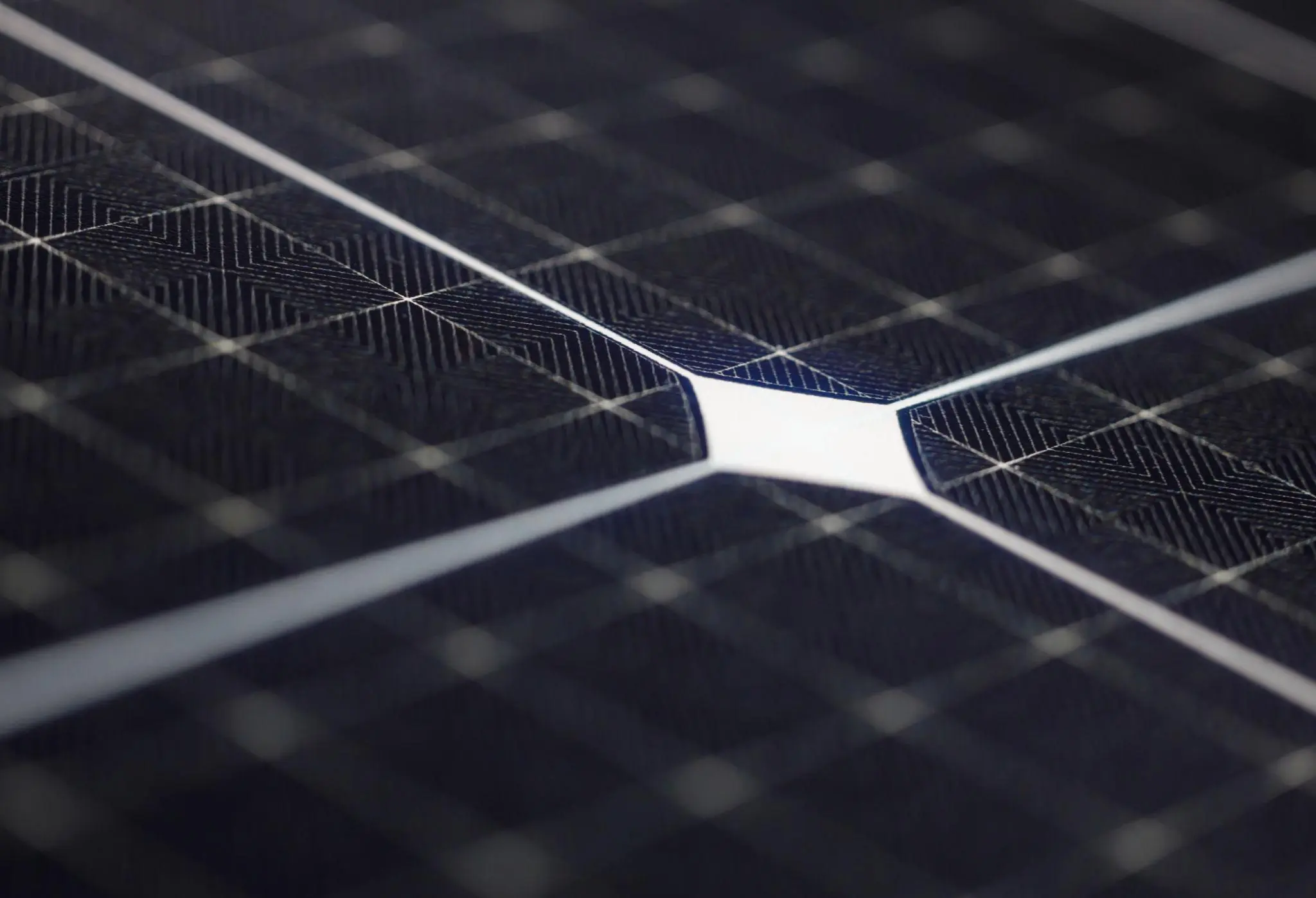
Precision at the Cell Level Defines Performance at Module Scale
Large-format wafer platforms are only as effective as the underlying cell architecture. Fine interconnection design, current pathways, and structural consistency all contribute to stronger output, better efficiency, and long-term reliability.
Two Large-Format Platforms. Two Strategic Advantages.
M10 and G12 are not simply larger wafers — they are platform decisions. M10 offers a strong balance between manufacturing maturity and project flexibility, while G12 pushes toward maximum module power and deeper BOS optimization in large-scale deployments.
M10 Platform
Engineered around the 182 mm wafer format, M10 supports high-output modules with strong compatibility across commercial rooftops, industrial arrays, and utility-scale systems.
G12 Platform
Built on the 210 mm wafer architecture, G12 enables ultra-high module wattage and a stronger cost-per-watt proposition for projects that prioritize scale, output, and installation efficiency.
Performance and Project Economics at a Glance
Both M10 and G12 wafer platforms elevate module output compared with legacy formats. The key difference is strategic: M10 balances power and flexibility, while G12 maximizes string output and cost-efficiency in higher-capacity systems.
| Technology Metric | M10 (182 mm) | G12 (210 mm) |
|---|---|---|
| Wafer Format | Large-format platform with strong deployment versatility | Larger active footprint for maximum module power classes |
| Module Power Class | High-output configuration for broad market fit | Ultra-high-output configuration for large-scale optimization |
| BOS Optimization | Improved cost efficiency versus smaller wafer generations | Greater savings potential through fewer modules and simplified balance-of-system design |
| LCOE Impact | Strong long-term project economics | Deeper LCOE reduction potential in utility-scale deployment |
| Ideal Fit | Commercial rooftops, industrial sites, mixed-use arrays | Large ground-mount projects and maximum-output system layouts |
Higher Power Density
Larger wafer formats increase active cell area, helping modules reach higher wattage classes with fewer panels per MW installed.
Smarter System Design
Higher output per module can reduce structure count, cable runs, combiner complexity, and installation labor across large projects.
Platform Reliability
When integrated with advanced cell interconnection and module engineering, both wafer sizes support stable long-term operating performance.
Choosing the Right Wafer Platform for the Right Project
The best platform depends on site priorities. M10 supports flexible system planning across a wide range of installations, while G12 is especially compelling where maximum energy density and lower cost per installed watt are the primary goals.
Commercial & Industrial Rooftops
M10 can offer a strong balance of output, handling, and system adaptability for roof-mounted projects with layout constraints.
Utility-Scale Solar Plants
G12 is highly attractive where project scale favors larger wattage classes, lower component counts, and stronger BOS savings.
High-Density Energy Planning
Both formats support modern high-performance module design, helping developers optimize yield, logistics, and lifecycle economics.
Find the Right Large-Wafer Platform for Your Project
Connect with Philadelphia Solar to explore M10 and G12 module configurations, compare project-fit advantages, and identify the right solution for your commercial or utility-scale installation.