




The Science of
Half-Cut Cell Technology
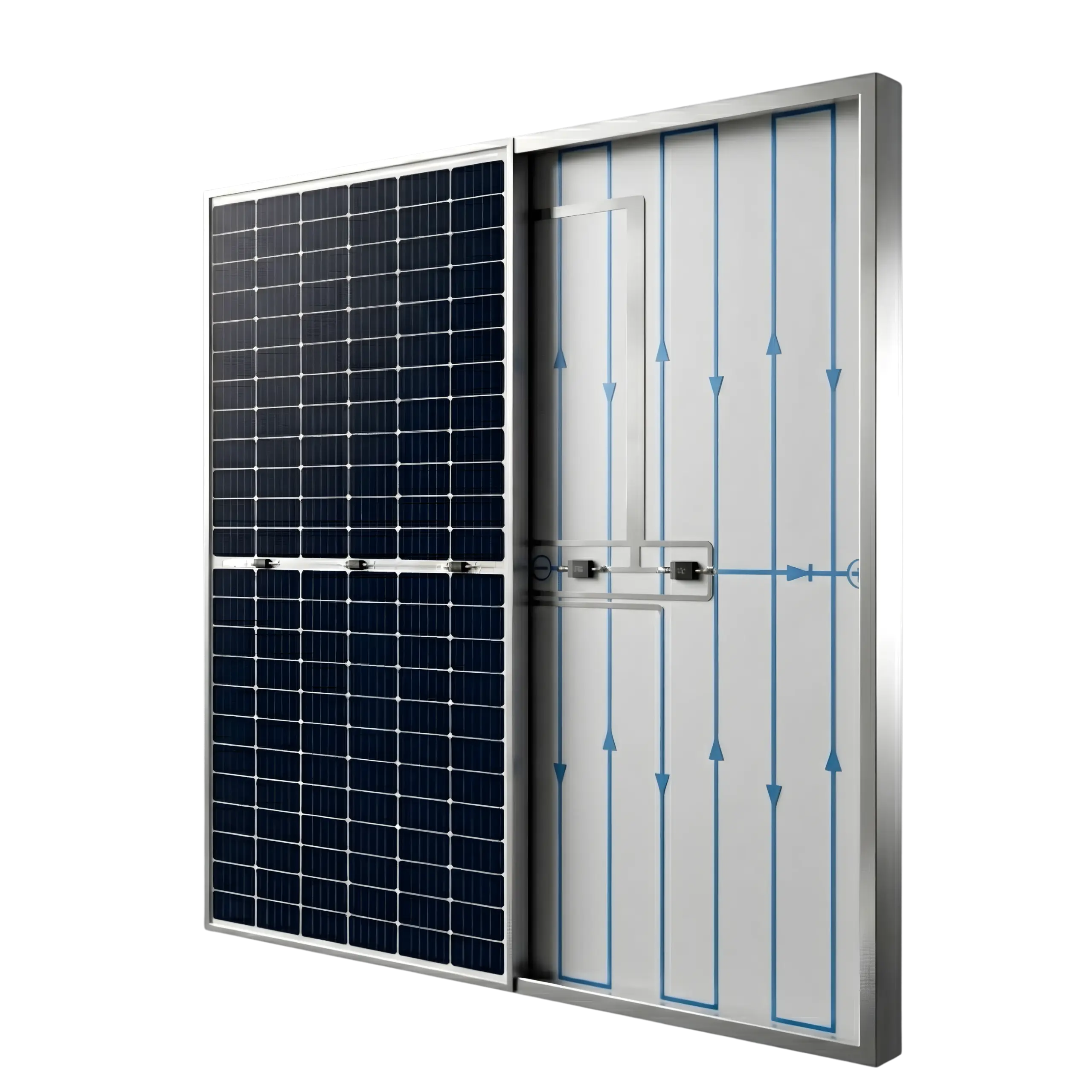
Half-Cell Technology, Engineered for Higher Yield
Philadelphia Solar half-cell architecture improves module performance under partial shading by dividing the current path into two more efficient operating sections. The result is lower electrical loss, reduced heat concentration, and more stable output in real operating conditions.
Internal Resistance & Energy Flow Analysis
Half-cut technology improves the electrical behavior of the module by reducing current flow in each cell path, helping reduce resistive loss and heat generation.
What Changes Electrically?
Reducing the current per path lowers internal losses, while the two-section module layout helps maintain output when part of the panel is affected by shade.
Half-Cut vs. Standard Architecture
A clear comparison of the main technical advantages behind Philadelphia Solar half-cut cell technology.
| Feature | Standard Cell | Philadelphia Half-Cut |
|---|---|---|
| Power Loss | Higher energy loss with full current flow | Reduced by up to 75% |
| Shading | Output drops significantly under shading | Maintains output through twin-section design |
| Temperature | Higher heat build-up | Lower operating temperature, around 2–3°C improvement |
| Micro-Cracks | Higher risk of crack propagation | Localized impact only |
| Hot-Spot Potential | Higher module failure risk | Enhanced hot-spot protection |
Structural Resilience & Mechanical Loading
Half-cut cell design supports stronger mechanical behavior by reducing cell size, distributing stress more effectively, and limiting the impact of micro-crack propagation.
5400 Pa Load Capability
Optimized stress distribution helps reduce micro-crack risk under heavy snow or high wind conditions.
Enhanced Structural Flexibility
The half-cut architecture helps cells withstand transport and installation vibration without compromising electrical pathways.
Crack Propagation Shield
Smaller cell sections help localize the impact of micro-cracks and protect long-term generation stability.
Engineered for Real Operating Conditions
Beyond efficiency, performance stability matters. Philadelphia Half-Cut cells are designed to control heat buildup and sustain generation under partial shading.
Independent Twin-Section Operation
Solar panels often lose performance under heat and partial shading. Philadelphia Half-Cut cells operate at lower current, significantly reducing heat buildup and helping prevent hot-spots that can damage modules over time.
Built for Verified Performance and Reliability
Quality assurance connects the technical design to manufacturing discipline, shipment confidence, and predictable long-term output.
Triple-Stage EL Testing
Every module undergoes Electroluminescence testing at three critical production stages to verify structural integrity before shipment.
0/+5W Positive Tolerance
Modules are designed to deliver rated output or more, supporting dependable system yield and confidence in every installed watt.
Anti-PID Technology
Engineered to resist Potential Induced Degradation under high-voltage and high-humidity conditions.
Warranty Support for Long-Term Solar Performance
Comprehensive coverage for materials and manufacturing quality, backed by Philadelphia Solar’s production standards.
Stable power output with a linear degradation curve, supporting consistent energy performance over decades.
Power Your Project with Philadelphia Solar Technology
High-efficiency Half-Cut modules engineered for maximum output, reliability, and long-term performance.