




Engineering Case Studies for Performance-Critical Applications
These projects demonstrate how Philadelphia Solar approaches complex technical requirements through resilient design, intelligent system integration, and infrastructure-grade execution across utility, industrial, and future-energy applications.
Benban Solar Project
Reliability in one of the world’s most demanding desert environments.
Strategic Context
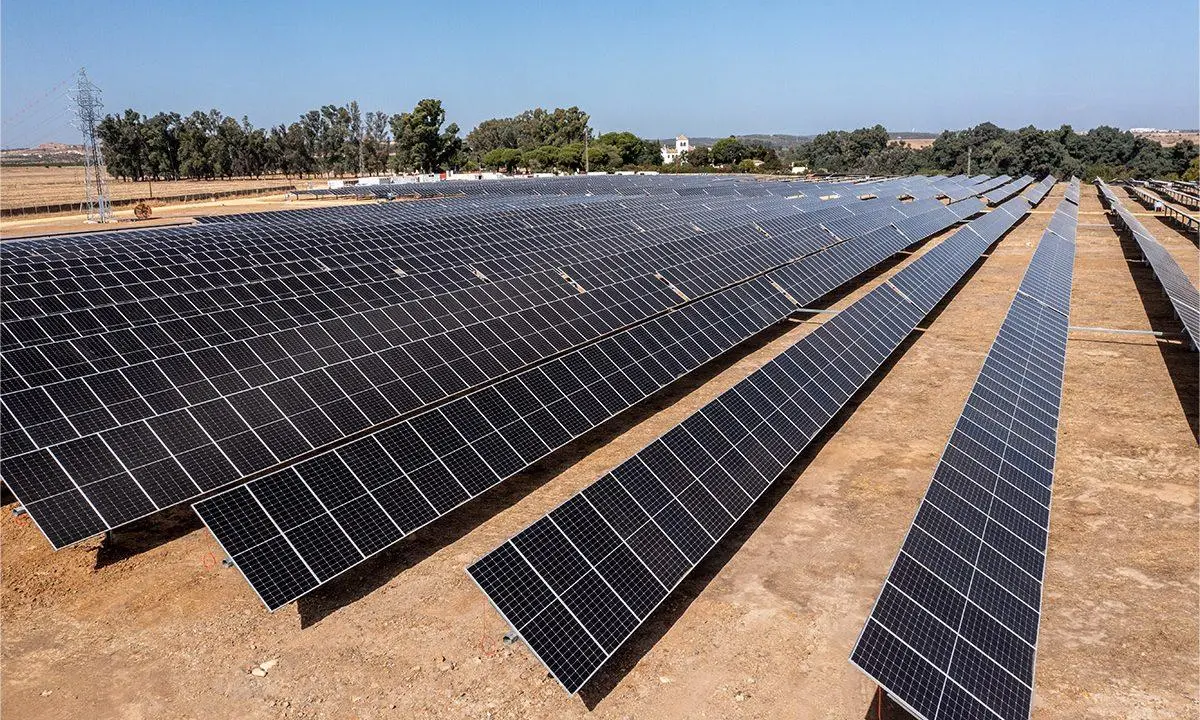
The Benban project forms part of one of the world’s largest solar clusters, with total development capacity reaching approximately 2.0 GW. Philadelphia Solar supplied 66 MW of high-efficiency modules to support this landmark utility-scale deployment.
The site is located in a harsh desert zone with temperatures exceeding 50°C, combined with abrasive dust and sandstorms that can reduce optical performance, stress system components, and challenge long-term yield stability.
Philadelphia Solar deployed modules engineered for Extreme Temperature Resilience, supported by a low temperature coefficient to reduce thermal losses under high heat. Anti-soiling glass treatment and PID resistance measures were also integrated to protect long-term output and reduce performance degradation in harsh desert conditions.
The plant continues to achieve annual generation aligned with strict technical performance expectations, reinforcing the competitiveness of Jordanian manufacturing in large-scale international solar developments.
Taybah Metal Industries
Engineering industrial-scale energy control through a Zero Feed-In strategy.
Strategic Context
This project is recognized as one of the largest solar installations in the region designed specifically for heavy industry, with an operational model centered on zero export to the public grid. The project is listed at 11 MWp with expansion potential to 19 MWp.
Steel and metal production facilities operate with highly dynamic and sensitive load profiles. The challenge was to maximize solar contribution to plant demand while ensuring that not a single excess watt would be exported to the national grid, avoiding both legal and technical conflict with utility requirements.
Philadelphia Solar designed a Smart Power Management architecture using a fast-response advanced controller capable of balancing PV generation with plant consumption in fractions of a second. The project also integrated customized Magnelis® mounting structures engineered for industrial structural demands.
The system achieved major energy cost reduction for the facility while proving Philadelphia Solar’s capability to deliver precise, high-reliability energy solutions for heavy industrial operations.
Green Hydrogen Project
Building the infrastructure layer for the next phase of decarbonization.
Strategic Context
In line with global decarbonization pathways, Philadelphia Solar is advancing projects targeting 200,000 tons of green hydrogen production, positioning the company within future-oriented energy value chains.
Green hydrogen economics depend heavily on access to highly efficient, low-LCOE renewable generation. The challenge is not simply to produce electricity, but to create an energy platform capable of supporting large-scale electrolysis and future industrial fuel applications.
Philadelphia Solar’s role is centered on supplying the clean energy backbone for Power-to-X applications by integrating large-scale PV generation with electrolyzer-driven hydrogen production. This creates the energy foundation for decarbonizing sectors that are difficult to electrify directly.
Philadelphia Solar is not only producing electricity — it is contributing to the infrastructure required to produce the fuels of the future and support deep industrial decarbonization.
Explore how engineering thinking creates measurable infrastructure value.
Discover how Philadelphia Solar translates technical complexity into resilient, high-performance energy solutions across real-world project environments.
Talk to Our Team